



The Beginner's Guide to British Classic Novels: 10 Must-Reads
There's a particular kind of anxiety that sets in near the classics shelf in a bookshop. The spines look handsome, the author names are famous, and the sheer thickness of some titles suggests homework rather than pleasure. The reality is friendlier than that. Most of these novels were written for ordinary readers who wanted a good story, and that remains the best reason to pick one up.
What follows is ten British classics worth your attention, grouped roughly by how demanding they are. Each entry covers why the book matters, how difficult it actually is, and which edition to buy. No prior knowledge assumed.
Before You Start: Three Small Adjustments
Three habits make an enormous difference when you return to nineteenth-century fiction after years away from it.
- Buy an annotated edition. Notes explain the money, the legal arrangements and the offhand references that no longer land. Penguin Classics and Oxford World's Classics are the reliable defaults, and both turn up regularly in charity shops.
- Give it sixty pages. Older novels often open with scene-setting and a slow gathering of characters. Some grip from the first line; others need a chapter or two to warm up.
- Allow yourself to stop. A classic you abandon without guilt is a better use of a fortnight than one you resent. Come back in five years and it will be a different book.
One more practical note: read the introduction after the novel, not before. Introductions are written for people who already know the plot, and they routinely give away twists that the author spent hundreds of pages arranging. Use the notes as you go, but save the essay for the end.
Start Here: Three Gentle Entries
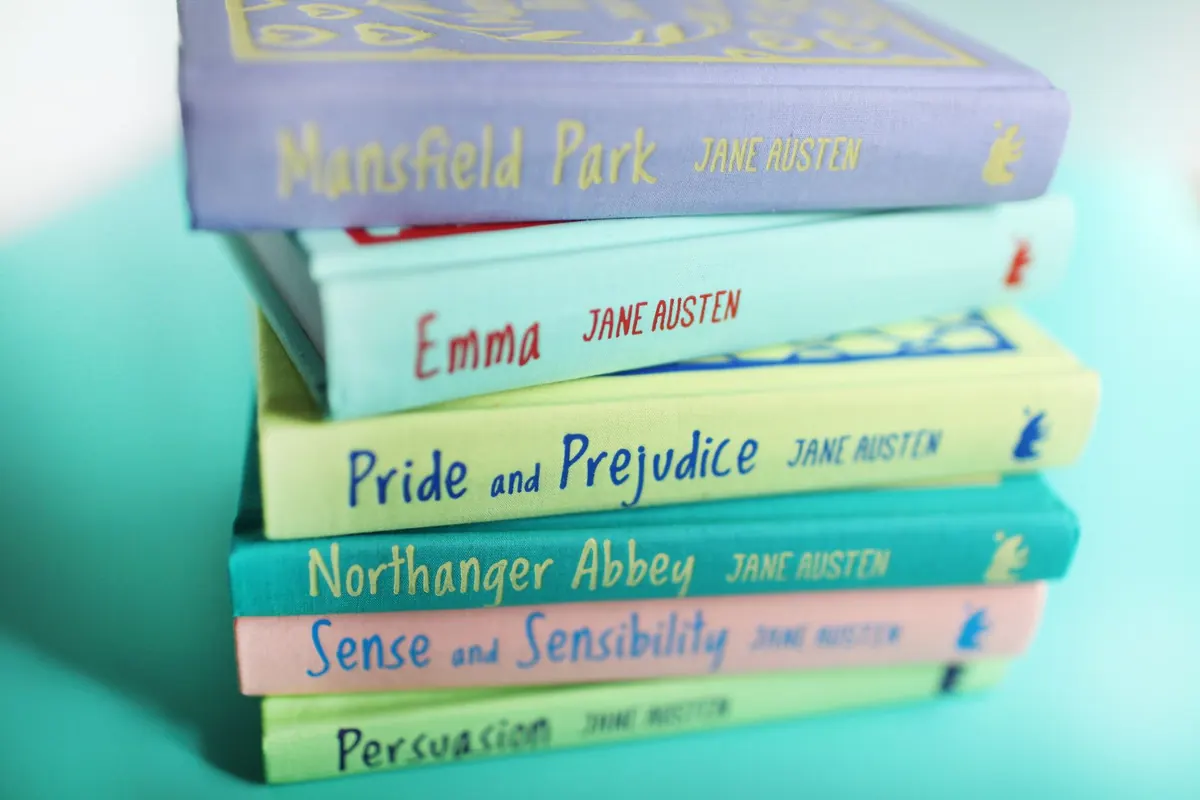
Pride and Prejudice — Jane Austen (1813)
Elizabeth Bennet, four sisters, an entailed estate and a marriage market that operates like a market in the literal sense. Austen's dialogue does most of the work, which is why the novel reads quickly despite being two centuries old. Difficulty: gentle. The Oxford World's Classics edition explains the incomes and inheritances; the Penguin English Library gives you a clean, plain text if you'd rather not read footnotes.
The Picture of Dorian Gray — Oscar Wilde (1890)
A portrait ages in place of the man it depicts. Wilde's only novel is short, witty and genuinely gothic, and it moves faster than most Victorian fiction because Wilde never lets a dull sentence stand. Difficulty: gentle, though the digressions on art and beauty test some readers. Two versions exist — the 1890 magazine text and the expanded 1891 book — so check which one you're buying. Penguin and Oxford print both and label them clearly.
The Remains of the Day — Kazuo Ishiguro (1989)
The newest novel here and the easiest read of the ten. Stevens, an English butler, drives through the West Country in 1956, reflecting on decades of service at Darlington Hall. The prose is calm and formal; the damage creeps up on you. Difficulty: gentle. The Faber & Faber paperback is the one to get.
The Nineteenth-Century Heavyweights
Jane Eyre — Charlotte Brontë (1847)
Orphan, school, governess, Thornfield Hall, a locked attic. Brontë writes in the first person and speaks directly to you, which makes the book feel startlingly modern. It is also a romance, a mystery and a quiet argument about women's independence, all at once. Difficulty: steady. Penguin Classics is a good default.
Great Expectations — Charles Dickens (1861)
Pip, an escaped convict on the marshes, and Miss Havisham's clocks stopped at twenty to nine. Dickens published in weekly instalments, so chapters are short and end on hooks — useful if you read on a commute. Difficulty: steady. The opening chapters are among the finest in English fiction, and the plot runs on a mystery that Dickens manages with unusual tightness.
Wuthering Heights — Emily Brontë (1847)
The hardest of the Victorian novels here. A visitor's account contains a housekeeper's account, covering two generations with several repeated names, plus dialect and considerable cruelty. Many editions include a family tree; use it, at least for the first fifty pages. Difficulty: demanding. Once the structure clicks, the novel becomes hypnotic rather than confusing. Penguin Classics and Oxford World's Classics both provide helpful genealogies.
A Step Further: Four More Challenging Classics
Middlemarch — George Eliot (1871–72)
Often called the most mature English novel, and not without reason. Eliot follows Dorothea Brooke, Tertius Lydgate and a whole provincial town through ambition, marriage and disappointment. There is no rush and no cheap villain; instead there is a wide, patient understanding of how people fail each other. Difficulty: demanding. Give it a month and read twenty pages a day. The Oxford World's Classics edition is excellent.
Bleak House — Charles Dickens (1852–53)
A lawsuit that has outlived everyone it touches, a young woman named Esther Summerson, and a fog that seems to cover both London and the human heart. Dickens alternates first-person and omniscient narration, which can feel jarring at first and then becomes one of the book's great pleasures. Difficulty: demanding. The Penguin Classics edition has a useful introduction and solid notes.
Tess of the d'Urbervilles — Thomas Hardy (1891)
A country girl, a ruined reputation, and a landscape that feels like a character in its own right. Hardy's prose can be dense with dialect and agricultural detail, but the story is direct and devastating. Difficulty: steady. If you liked Jane Eyre, this is the natural next step into Victorian tragedy.
Mrs Dalloway — Virginia Woolf (1925)
One June day in London, and a woman preparing to host a party. Woolf moves between minds and memories, so the plot is less important than the rhythm. Read it slowly, ideally in a few long sittings rather than many short ones. Difficulty: moderate to demanding. The Oxford World's Classics edition explains the postwar context and Woolf's references.
Reading Them Without Burning Out
Classics are not a test of endurance. They are books, and they respond well to a little planning.
- Set a daily page count. Ten pages a day finishes most Victorian novels in six to eight weeks. That is faster than it sounds, and it keeps the characters fresh in your mind.
- Keep a bookmark with names. A scrap of paper listing who is related to whom saves constant flipping. This is especially useful in Wuthering Heights and Middlemarch.
- Read aloud when stuck. Austen's irony and Dickens's comedy often land better in the ear than on the page.
- Alternate with something lighter. A thriller or a short story collection between chapters can prevent fatigue without breaking the spell.
If You Only Read One
If you want the single best introduction to the British classic, start with Pride and Prejudice. It is short, funny, emotionally intelligent and almost impossible to put down once the Bennet sisters arrive at the assembly. If you prefer something darker, choose Jane Eyre. And if you want the book that will change how you see an entire century, choose Middlemarch — but give it the time it deserves.
Where to Find Them Cheaply
You do not need a matching set of leather-bound volumes. Charity shops, second-hand bookshops and library sales are full of Penguin and Oxford editions for a few pounds. Buy the one with the most readable print and the least brittle spine. A battered copy with someone else's marginalia is often a better companion than a pristine hardback you are afraid to crack.
Finally, remember that these novels were not written to be admired from a distance. They were written to be argued with, laughed at and lived inside. Pick one up, give it sixty pages, and let it surprise you.
Photo: Leah Newhouse / Pexels
Related posts
More stories you’ll love reading